.png)
Feature
Bringing Tech to the Health Frontline: Digital Solutions Strengthening Community Healthcare
CISDI Secretariat • 18 Feb 2026
Amid the wide range of public health challenges in Indonesia, frontline health workers—including puskesmas (community health centre) and posyandu (health post) cadres—play a crucial role in supporting communities to make informed health decisions. In practice, however, such decisions are often made in contexts of limited information, suboptimal service coordination, and heavy workloads, particularly within primary healthcare services.
In response to these challenges, CISDI, together with PUSKAPA Universitas Indonesia and The University of Melbourne, designed a research project entitled “Pencerah Nusantara Application: Helping Communities Make Informed Health Choices through a Decision-Support Tool”. The study has supported the co-development of a digital decision-support application called Pencerah Nusantara, including the PN-PRIMA module (Puskesmas Responsif, Inklusif, Masyarakat Aktif Bermakna or Responsive, Inclusive, Active and Meaningful Community Health Centres), an approach to strengthening primary healthcare services that places communities at the centre of change.
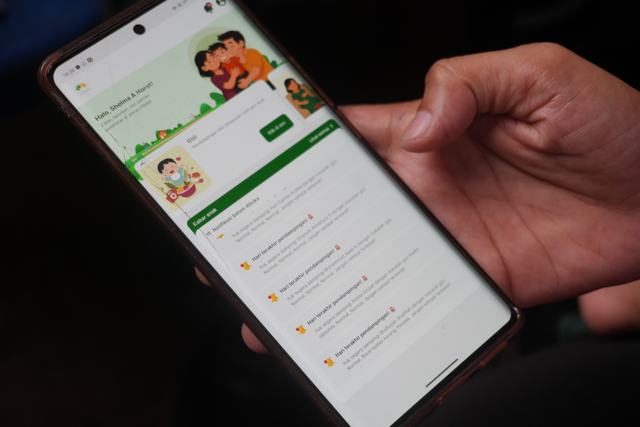
Rather than presenting technology as a stand-alone solution, the research places user needs at the forefront. The Pencerah Nusantara application, which can be used on mobile phones, is designed to align with the realities of frontline work: health workers must manage multiple programs simultaneously, respond to diverse community needs, and ensure continuity of care. By providing structured and easily accessible information, the application strengthens service coordination, enables earlier identification of health risks, and encourages data-driven follow-up at community level.
The experiences of health workers and cadres provide tangible insight into how the application operates in daily practice. During KONEKSI’s visit to Sukmajaya Primary Health Centre and Posyandu Mawar A in Depok City on 22 January 2026, a range of impact stories emerged—from child growth monitoring to more targeted family support.
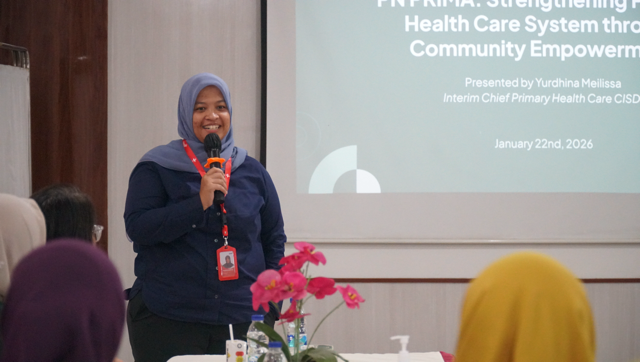
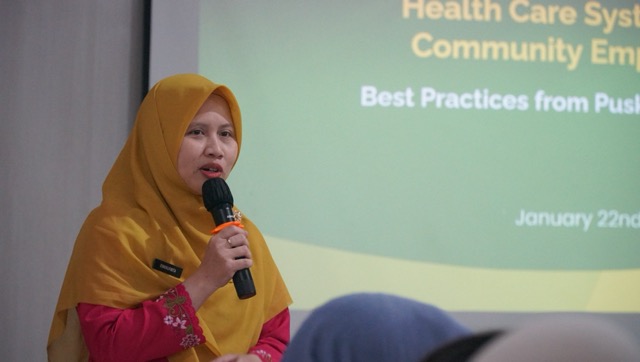
“Puskesmas and posyandu cadres are the backbone of basic healthcare services,” emphasised Yurdhina Meilissa from the Center for Indonesia’s Strategic Development Initiatives (CISDI) during her presentation at Sukmajaya Primary Health Centre. With the expansion of posyandu roles through the Integrated Primary Care (ILP) approach, services are no longer limited to mothers and children but now span the entire life cycle. Consequently, the workload of cadres has increased.
“Posyandu now serves not only mothers and children but all community members. As a result, the workload of cadres has become heavier. At present, 400 infants and toddlers are being monitored through the application,” said Dr Enninurmita, representing Sukmajaya Primary Health Centre in Depok City.
Isyna Saiidah, Associate Nutritionist at Sukmajaya Primary Health Centre, added that the key added value of PN-PRIMA lies in providing clear follow-up steps for cadres. “The PN-PRIMA application complements existing systems. Its added value is that cadres clearly understand the next steps that need to be taken.”
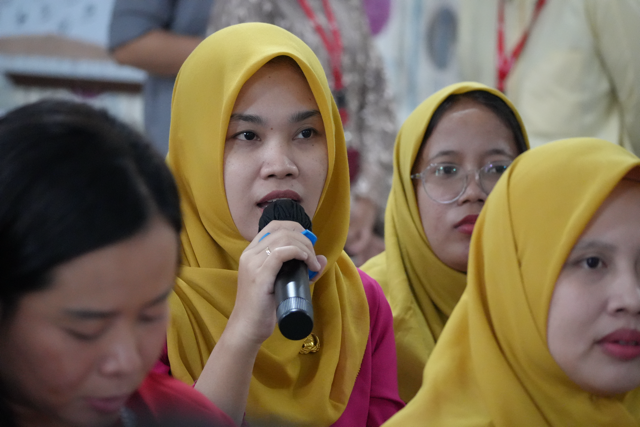
For cadres, the application has had a direct impact on their daily activities. Shelma A. Horst, a posyandu cadre since 2023, described a workflow that has become more structured:
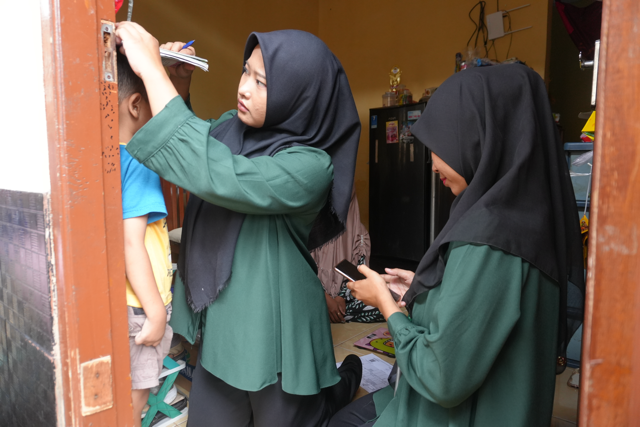
“This application greatly supports cadres in carrying out their duties because it provides notifications. Cadres validate cases through home visits, measure height, input the data into the application, and then receive a suggested diagnosis along with recommended actions. The application also reminds us of the next steps.”
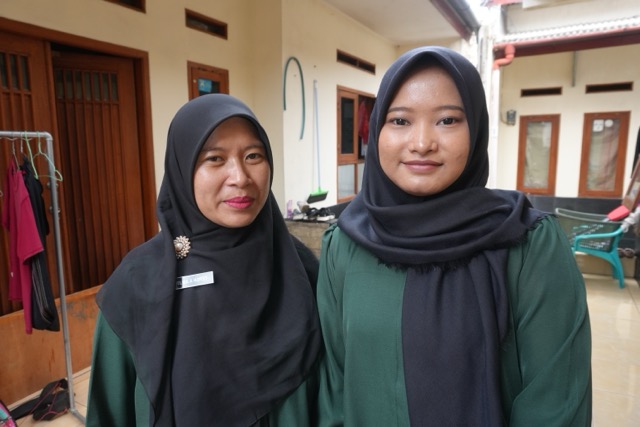
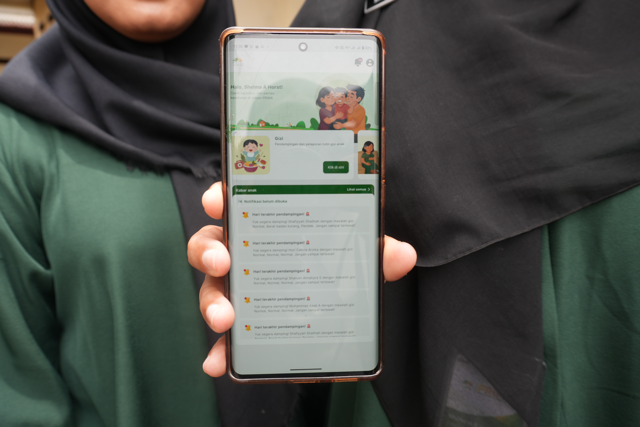
PN-PRIMA complements existing reporting systems with intervention and mentoring features. Toddlers identified as being at nutritional risk receive continued support from cadres, while health messages can be delivered more accurately to mothers and families. This approach strengthens the role of cadres as a bridge between healthcare services and communities, while also increasing public trust.
“What we have observed is that with the presence of PRIMA cadres, community trust has increased because services are delivered more inclusively, without discrimination—and that is extremely important,” added Dr Enninurmita.
The development process of PN-PRIMA also underscores the importance of cross-sector collaboration. Competency-based and community approaches run alongside each other, encompassing cadre training, ongoing mentoring, and the development of practical guidelines and educational materials. Cadres are not only implementers but are increasingly acting as peer educators who promote positive health behaviours within their communities.
Field experience demonstrates that technology can deliver meaningful impact when integrated with strong local leadership, adequate health workforce capacity, and active community engagement. In this context, digital innovation does not replace human interaction; rather, it strengthens it.
One of the study’s key commitments is to share findings and lessons openly. By widening access to the knowledge generated, Pencerah Nusantara is expected to serve as a reference point for future research collaboration and health innovation. This effort also supports the development of more responsive and evidence-informed policies, both in Indonesia and within the framework of Australia–Indonesia research cooperation.
Through its support for initiatives such as the Pencerah Nusantara Application, KONEKSI continues to promote the use of research as a foundation for strengthening health systems. Through an app that puts information directly in the hands of health workers, this initiative demonstrates that when research, technology, and real-world needs are effectively connected, innovation can become a powerful means of improving service quality and community wellbeing.
----------
This article was originally published on koneksi-kpp.id on February 2, 2026. It is republished on this website for documentation and educational purposes.