.png)
Press Release
From Geneva, Switzerland, CISDI Calls for Cross-Sector Collaboration to Strengthen Primary Health Care at WHA 2026
Hanindito Arief Buwono • 19 Mei 2026
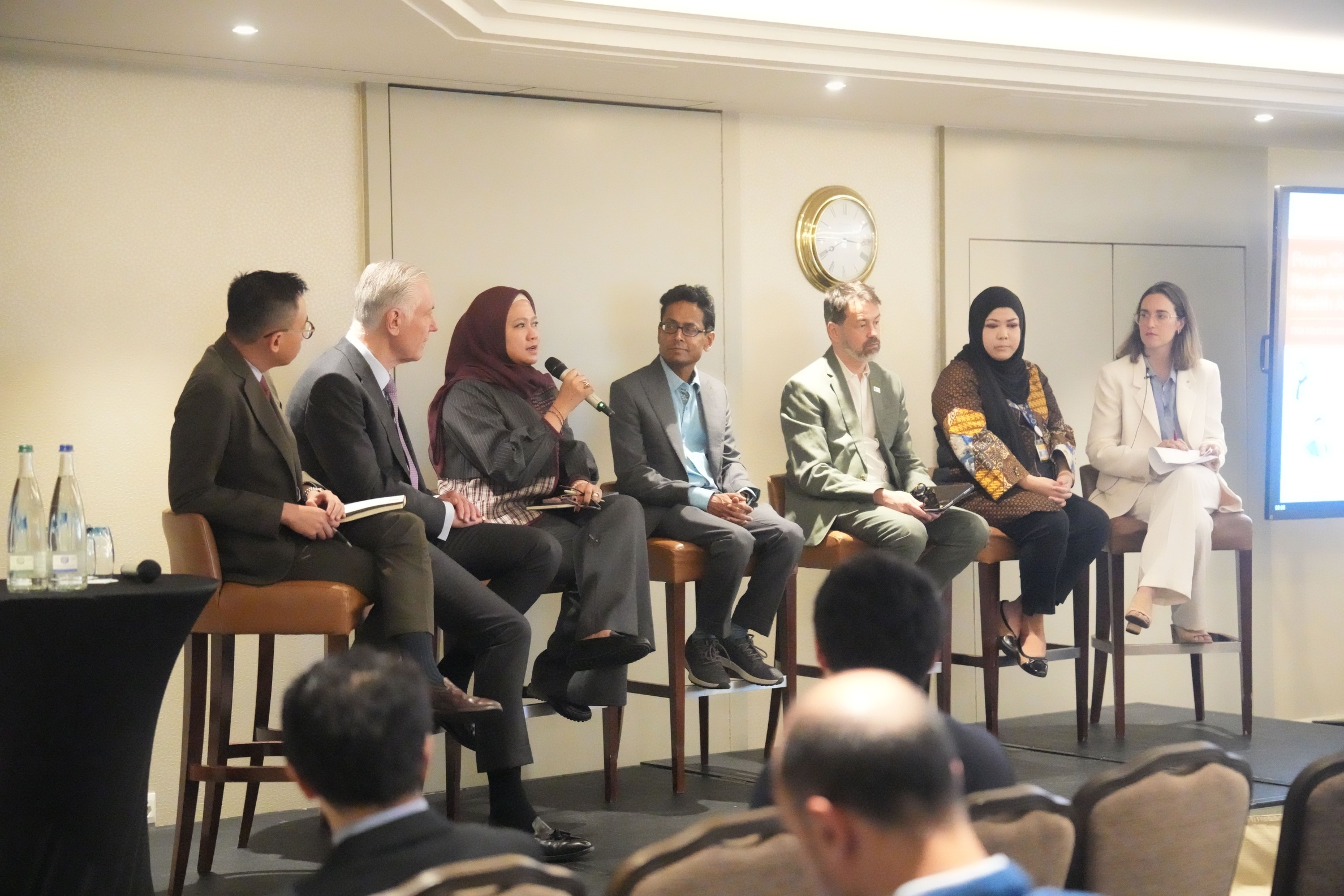
Geneva, May 20, 2026 – The Center for Indonesia’s Strategic Development Initiatives (CISDI) hosted an official side event at the 2026 World Health Assembly (WHA) titled “From Chaos to Care: Rebuilding the Global Health Architecture” in Geneva, Switzerland. The public discussion brought together speakers from global partner organizations and stakeholders across multiple sectors.
Through this forum, CISDI invited civil society groups, multilateral organizations, academics, and private sector representatives to revisit how global health architecture can be redesigned to become more sustainable and responsive to people’s needs. The panel discussion explored pressing challenges facing today’s global health systems, including declining trust in multilateral institutions and persistent health inequities experienced across many countries.
CISDI Founder and CEO, Diah Satyani Saminarsih, emphasized that redesigning global health architecture must ensure that policies, governance systems, and international partnerships become more responsive to communities’ needs.
"What we need today is a new approach to building health partnerships, one that starts with the real needs of communities. Solutions must be tailored to local contexts so health systems can become more sustainable and truly address the needs of the people they serve," Saminarsih said during the panel discussion.
Alongside CISDI, the discussion featured Dr. David Duong, Director of the Program in Global Primary Health Care at Harvard Medical School and Brigham & Women's Hospital; Dr. Kumanan Rasanathan, Executive Director of the Alliance for Health Policy and Systems Research at WHO; Dr. Lutz Hegeman, President of Global Health at Novartis; Anita Sabidi, Member and Advocate of PERSADIA Muda and the International Diabetes Federation; and Mikaël Garnier-Lavalley, Deputy Executive Head of the Pandemic Fund.
Saminarsih noted that primary health care systems continue to face inadequate investment and limited capacity support, despite being widely recognized as the foundation of resilient and effective health systems.
The Rector of Universitas Harkat Negeri (UHN), Sudirman Said, highlighted that today’s challenges in global health systems and primary health care cannot be solved by a single sector alone.
"Universities play a critical role in bridging local realities and global knowledge, ensuring that solutions developed are truly relevant to community needs," Sudirman said in a pre-recorded opening message.
This perspective was reinforced by Dr. Kumanan Rasanathan, who underscored the importance of learning from cross-sector collaboration practices in building more effective health systems tailored to each country's context.
According to Rasanathan, strengthening primary health care must remain a priority despite global resource constraints, through partnerships capable of supporting national health system needs.
"We ask ourselves: ‘what should the role of global health architecture be?’ For most countries, it is about providing global public goods; the need for innovation, knowledge sharing, and capacity strengthening. It is time we fulfill our commitment to work together and collaborate toward better global health," said Rasanathan.
He further stressed that strengthening primary health care cannot rely solely on governments. The role of global health institutions, universities, and private sector actors is becoming increasingly important in developing more sustainable models of collaboration.
Dr. David Duong of Harvard Medical School added, "We’ve seen numerous reports showing a significant decline in trust in health care systems, partly because we have failed to learn from people with lived experience. I believe academia needs to reflect on its role as a guardian of truth and a steward of knowledge. Going forward, we need to bring those with lived experience directly to the forefront so we can collaborate and build better health care systems for all."
During the forum, CISDI introduced the Primary Healthcare Impact Lab (PHIL), a multi-sector collaboration model designed as an innovation and research hub focused on strengthening primary health care in Indonesia. PHIL was developed in partnership between CISDI, Universitas Harkat Negeri, PT Tamaris Hidro, and Harvard Medical School.
Launched on May 7, 2026, in Jakarta, PHIL serves as a cross-sector research and dialogue platform rooted in local contexts, aiming to connect academic research with community needs. Based at UHN’s campus in Tegal, Central Java, PHIL works closely with Harvard Medical School as a knowledge partner and seeks to demonstrate how place-based collaboration can inform national policy discussions.
President Director of PT Tamaris Hidro, Mohammad Syahrial, stated that current global challenges show that international funding is becoming increasingly limited, while governments cannot address health system strengthening challenges on their own. For this reason, stronger health systems require shared commitment, including from the private sector.
"We joined PHIL not merely to offer symbolic support, but to invest in a partnership we believe can address structural gaps and create long-term impact on public health," Syahrial said in a pre-recorded opening message.
– END –
About CISDI
The Center for Indonesia’s Strategic Development Initiatives (CISDI) is a non-profit organization committed to advancing health sector development and strengthening health systems through impact-driven policies, research, advocacy, and innovative interventions that are inclusive and participatory.
For more information:
CISDI Media Team
+62 851-1139-0040
Email: [email protected]
Website: www.cisdi.org